
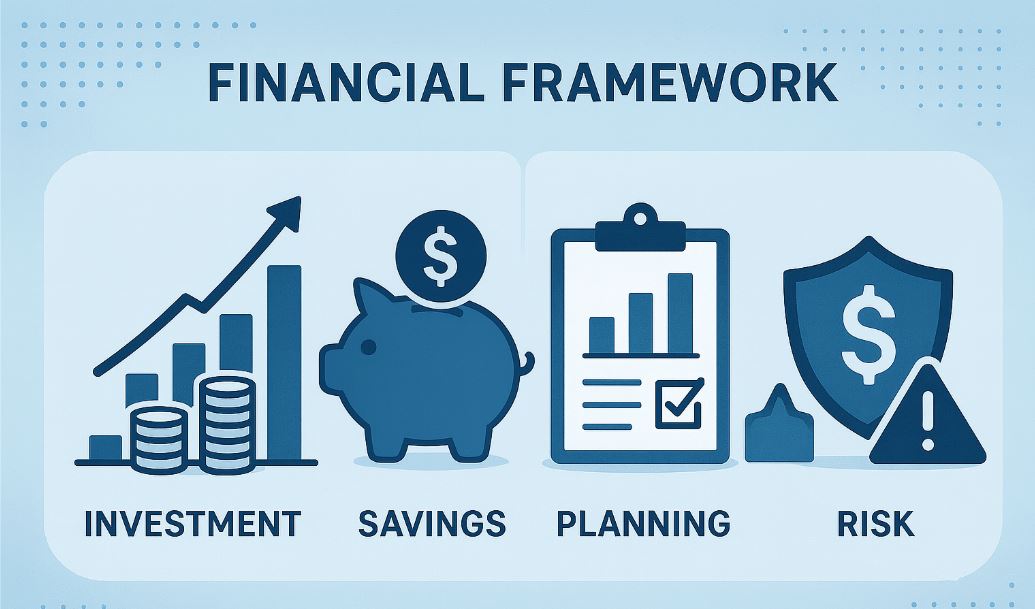
Understanding the Islamic Economic System by Mufti Taqi Usmani: A Timeless Framework for Modern Financial Ethics
In today’s volatile global economy, there is a growing demand for ethical and sustainable financial systems. As capitalism faces criticism for inequality and exploitation, many are turning toward alternative models. One of the most coherent and principled frameworks available is the Islamic economic system, described by Mufti Taqi Usmani in a lecture delivered on July 5, 1992, at the Seminar Hall, University of Karachi. This article explores the depth and relevance of Mufti Taqi Usmani’s vision, illustrating how his timeless insights serve not only Muslims but anyone seeking a balanced economic life.
Table of Contents
Who is Mufti Taqi Usmani?
Mufti Taqi Usmani is globally recognized as one of the most authoritative voices in Islamic finance and jurisprudence. His extensive scholarly work and judicial background provide a unique lens through which we can understand the economic teachings of Islam. What sets his perspective apart is its grounding in both classical Islamic jurisprudence (Islami Fiqh) and contemporary financial realities. By focusing on four foundational questions of economics, Mufti Taqi Usmani lays out a system that is holistic, moral, and adaptable to the complexities of modern life.
Islam as a Comprehensive Way of Life
According to Mufti Taqi Usmani, Islam is not merely a spiritual code or a set of religious rituals; it is a comprehensive way of life. Economic activity, in this view, is an integral part of the broader Islamic teachings. It is neither independent of ethics nor immune from divine commandments. While many modern ideologies treat economics as an autonomous field driven by mathematical models or profit maximization, Mufti Taqi Usmani argues that Islam embeds economics within a larger moral and social context.
Importantly, he clarifies that Islam does not offer a “purely economic system” in the technical sense of modern economics. Instead, Islam provides guidelines and principles that govern economic behavior in light of ethical and spiritual values. This distinction is crucial because it underscores the holistic nature of the Islamic worldview—one in which wealth and commerce are means to a higher moral end, not ends in themselves.
Economics is not a foundational issue in Life:
Mufti Taqi Usmani emphasizes that while economics is indeed a vital component of life, it is not the foundational issue. The primary concern of Islam is to cultivate a just, moral, and God-conscious society. Economic guidelines are essential, but they serve this larger purpose.
The Importance of Economic Teachings in Islam
In the lecture, Mufti Taqi Usmani points out that if one were to divide the entire teachings of Islamic jurisprudence (fiqh), nearly half of it pertains to economic matters. This includes laws related to trade, contracts, labor, inheritance, zakat (charitable almsgiving), and more. The sheer volume of legal discourse on economic issues demonstrates the significance Islam assigns to financial ethics.
The Qur’an, Hadith (sayings of the Prophet Muhammad), and centuries of Islamic legal tradition provide extensive guidance on how wealth should be earned, spent, saved, and distributed. The emphasis is on fairness, mutual consent, risk-sharing, prohibition of exploitation, and responsibility toward the community.
Contemporary Islamic finance—a field heavily shaped by Mufti Taqi Usmani’s scholarship—has successfully translated these principles into practical tools such as sukuk (Islamic bonds), takaful (Islamic insurance), and riba-free banking. These developments prove the enduring relevance of Islamic economic teachings.
Understanding the Four Foundational Economic Questions
At the heart of Mufti Taqi Usmani’s lecture are four core economic questions that any society must answer:
1. Determining Priorities
The first economic question revolves around the setting of priorities. Mufti Taqi Usmani explains that human needs are endless, but available resources are limited. This mismatch necessitates making choices about what is essential and what can be postponed or foregone.

For example, a person may need shelter, food, education, healthcare, transportation, and entertainment, but cannot afford all of them simultaneously. Islam guides individuals and societies to prioritize necessities (daruriyyat) over conveniences (hajiyyat) and luxuries (tahsiniyyat). This system of categorization helps Muslims make financially responsible and ethically sound decisions.
Mufti Taqi Usmani relates this concept to the Islamic principle of moderation. Neither extreme asceticism nor unchecked consumerism is encouraged. Instead, believers are taught to spend responsibly, save prudently, and give generously.
2. Allocation of Resources
The second question concerns how available resources should be allocated. In capitalist systems, market forces often determine where resources go. In socialist systems, central planning does. Mufti Taqi Usmani proposes a third way: guided freedom within ethical boundaries.
Resources like land, labor, capital, and entrepreneurship are considered trusts from God. They must be utilized in ways that benefit not only the individual but also the community. Unused or hoarded resources are discouraged, as are exploitative uses that harm others.
An example provided by Mufti Taqi Usmani involves landowners and industrialists. Their assets should be used productively and ethically. Idle wealth is seen as a societal loss, and Islam encourages initiatives that create jobs, produce goods, and enhance communal welfare.
3. Distribution of Wealth
Once production begins and income is generated, the third question arises: How should this wealth be distributed? Mufti Taqi Usmani emphasizes that equitable distribution is a cornerstone of Islamic economics.

Unlike unregulated capitalism, which may allow wealth to accumulate among a few, Islam mandates mechanisms to circulate wealth. These include:
- Zakat: a compulsory charity that redistributes 2.5% of one’s annual wealth to the poor
- Inheritance laws: ensuring wealth is passed down to multiple heirs, not hoarded
- Prohibition of riba (interest): preventing the exploitation of borrowers by lenders
Mufti Taqi Usmani argues that these tools, if properly implemented, can reduce income inequality and foster social cohesion.
4. Economic Growth
Finally, the fourth economic question is about growth. How can existing resources be enhanced to improve quality and quantity of life? According to Mufti Taqi Usmani, growth is desirable, but it must be pursued within ethical constraints.
Islamic growth focuses on value creation, not just profit maximization. It encourages innovation, entrepreneurship, and efficiency but rejects practices that harm people or the environment. For instance, producing more food is good; doing so with chemicals that cause cancer is not.

Mufti Taqi Usmani calls for a developmental model that balances material prosperity with spiritual well-being. In doing so, he anticipates modern concepts like ESG (Environmental, Social, Governance) investing, decades before they became mainstream.
Ever Green Islamic Framework of Mufti Taqi Usmani
As the world grapples with AI automation, ecological collapse, and social polarization, the balanced framework offered by Mufti Taqi Usmani gains renewed relevance. The four questions remain universal. They apply in Silicon Valley as much as in Sindh.
Today’s fintech startups, Islamic banks, and ethical funds are embedding Mufti Taqi Usmani’s principles into smart contracts, blockchain wallets, and zakat-calculating apps. The digital ummah—from Jakarta to Toronto—finds in his teachings a moral compass for economic innovation.
To explore more of Mufti Taqi Usmani valuable insights and scholarly works, you can visit the dedicated category on KitabFarosh by clicking the link below. This article is based on Mufti taqi Usmani framework for Islamic Economics, written and published by KitabFarosh. If you wish to order Mufti Taqi Usmani’s Islamic books anywhere in Pakistan, KitabFarosh offers fast, reliable, and secure delivery through TCS.
👉 Mufti Taqi Usmani Books – KitabFarosh
What is the Islamic view on economic justice?
Islam demands fairness in wealth creation and distribution. Mufti Taqi Usmani highlights zakat, prohibition of riba, and inheritance laws as tools for justice according to Islam.
Can Islamic economic principles be applied globally?
Yes. Mufti Taqi Usmani shows that ethical financial practices benefit all societies, Muslim or not.
What role does Mufti Taqi Usmani play in modern finance?
Mufti Taqi Usmani is a key architect of Shariah-compliant Islamic banking and finance, influencing practices across 70+ countries.
What is the main contribution of Mufti Taqi Usmani to Islamic economics?
Mufti Taqi Usmani codified modern Shariah(Islam) standards for global finance, making halal investment practicable on every continent.
How do the four economic questions differ in Islamic and secular theories?
Islamic theory, as taught by Mufti Taqi Usmani, anchors each question—priorities, allocation, distribution, growth—in moral accountability to God rather than mere profit.
Can AI-driven markets still apply Mufti Taqi Usmani’s guidelines?
Yes. Ethical screens, smart contracts, and zakat-automated wallets can embed Mufti Taqi Usmani’s riba-free Islamic principles And Islamic Framework for Economics even in decentralized finance.