The First Responders We Often Overlook: How Madrasa Students in Pakistan Quietly Carry the Nation in Crisis
When Pakistan is tested—by flood, earthquake, displacement, or any other calamity—the first pictures we expect to see are of broken roads, submerged homes, and faces lined with worry. Yet if we look a little longer, we notice another, quieter pattern: groups of young men in simple dress, sleeves rolled up, moving from lane to lane with brooms, buckets, ration bags, and duas on their lips. These are Madrasa students in Pakistan and the scholars who guide them, people whose everyday training in humility, patience, and service becomes an extraordinary asset when the country is under strain. Their classrooms are not only halls of study; they are workshops of character, where khidmat-e-khalq—service to Nation—sits alongside memorization, jurisprudence, and ethics.
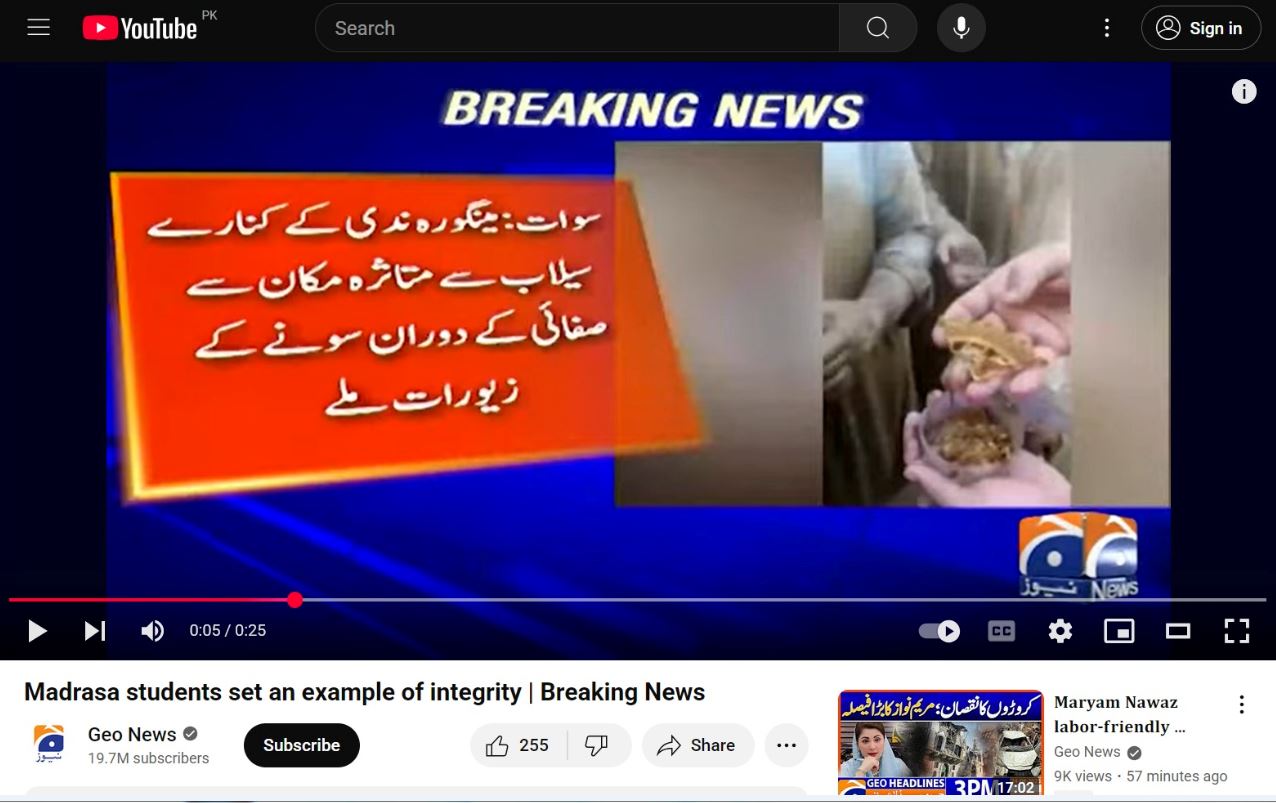
Madrasa students set an example of integrity
video link :
https://www.youtube.com/watch?v=Ytm69lzL2Rw
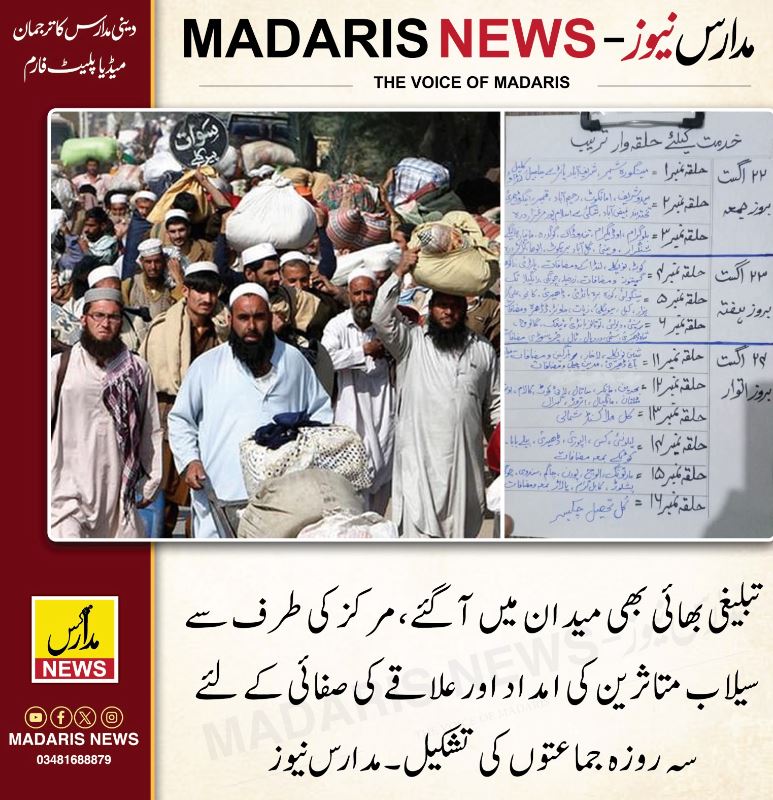
Table of Contents
First responders
In moments of crisis, this inner furniture of the heart shows. Without waiting for applause or headlines, they organize themselves, pool the little cash they have, borrow vehicles, coordinate with local elders, and then simply start helping. It is not glamour and it is not noise; it is steady human work that dignifies both the giver and the receiver. Over the years, I have come to believe that this culture of readiness is not accidental. It grows from early mornings of discipline, from teachers who are role models, from a curriculum that weds knowledge to responsibility, and from families who quietly raise children to care.
In a world obsessed with visibility, these efforts are often unseen. But if we care about what keeps a society standing after the water recedes, we must look again—and say aloud what is true: Madrasa students in Pakistan are among our most dependable first responders of the heart.
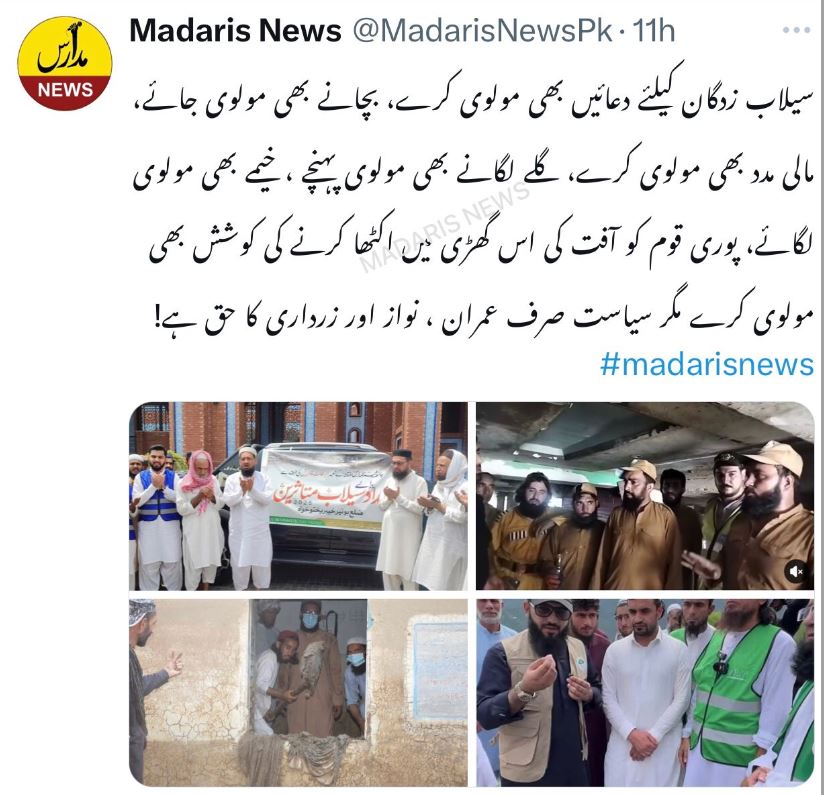
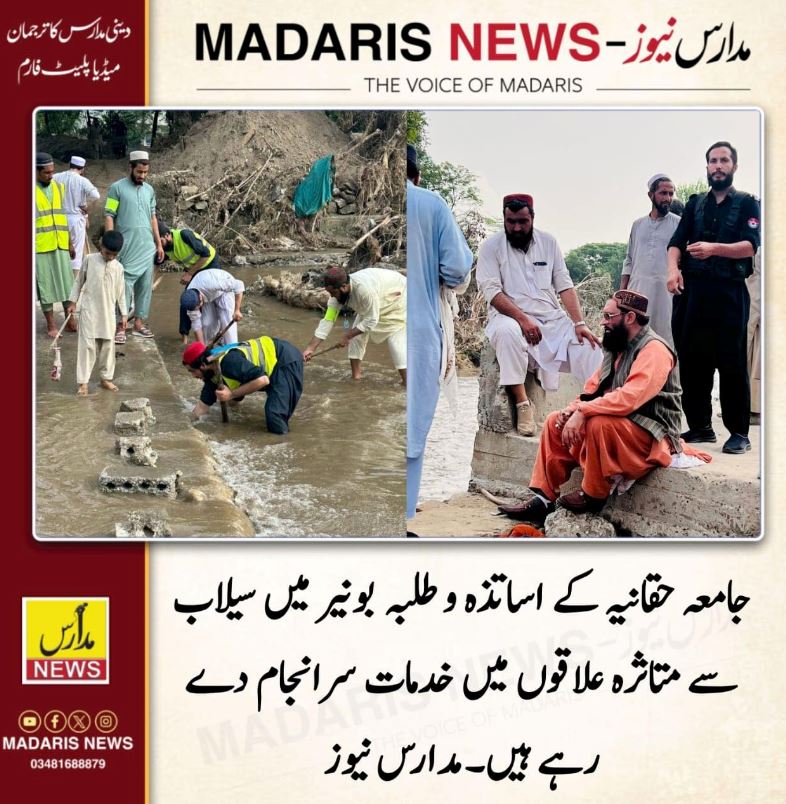
In the recent floods of Pakistan that struck districts like Buner and Swat, this truth was visible in every neighborhood where the water had muddied homes and buildings. Within hours and days, students from seminaries (Madrasa) across the country set off for the Northwest, sometimes sleeping on bare floors of mosques, sometimes under the open sky. Institutions like Jamia Tur Rasheed in Karachi, the Ibrahim Institute in Lahore, and Jamia Khair-ul-Madaris in Multan—among many others—ignited the same flame: respond first, discuss details later.
They needed no stage
The result was a cascade of small mercies that together became a wave of relief: cleaning drains choked with silt, disinfecting streets, comforting families who had lost their dowry chests and school books, helping elderly men and women reach clinics, distributing plastic sheets for temporary shelter.
Some teams partnered with local administrations for ration management. Many carried not only muscle but also rupees: donations gathered in mosques, neighborhoods, and small shopkeepers’ tills were turned into immediate support. The most remarkable part? This volunteer army needed no stage. Their aim was not to trend; it was to serve. In those muddy streets, “Madrasa students in Pakistan” was not a phrase—it was a presence, a hand on a shoulder, a broom across a threshold, a dua whispered softly so that pain might feel a little less alone.
Their aim was to serve
One story from these flood-hit areas has lingered with me because it captures, in a single moment, the moral core of this tradition. A group of students were clearing out a waterlogged room when they discovered twenty tolas of gold, glinting beneath a layer of silt. For many families, that much gold represents years of saving—wedding jewelry, emergency protection, the hope of a safer tomorrow. The students did not hesitate. They called the homeowner, returned every bit of it, and offered prayers for the family’s recovery.
The owner, astonished and relieved, insisted on giving a cash reward—ten thousand rupees.
The young man who received it could have tucked it away for his own needs; instead, he walked to the donation desk and contributed the entire amount for the relief of other flood-affected families. That is not merely honesty; it is “Amanah” (Islamic Term) a living lesson in what it means to be trustworthy with what God has placed in your hands.
Lost cash packets returned, medications purchased with pooled stipends, time and sweat given without counting—and you begin to see how Madrasa students in Pakistan turn religious instruction into social repair. Such stories are not miracles. They are the predictable outcome of a value system that teaches: what is not yours, do not touch; what you can give, give entirely; what you do, do it sincerely for the sake of Allah, whether anyone notices or not.
To understand why this response keeps repeating across decades, we have to look at the continuum that connects learning with living. Pakistan has seen many trials: the 2005 earthquake that shattered the North; the super-floods of 2010 that re-drew maps; the pandemic that tested our patience and our system; the recurring waves of displacement that forced families to start again. In each episode, Madrasa students in Pakistan have turned up—not to compete with the state or civil society, but to stand beside them. You will find them organizing prayer spaces at relief camps and ensuring the elderly are not isolated while the urgent crowds the essential.
KitabFarosh Online Bookstore – Introduction
KitabFAROSH Online Bookstore—Pakistan’s trusted home for Islamic and educational Books—has spent years putting Dars-e-Nizami course books, reference works, and practical manuals into the hands of students and teachers. When you invest in authentic learning resources, you are not only filling shelves; you are shaping servants of society. And yes, this is also a space where value meets value: a well-run bookstore can sustain limited-time offers that stretch a student’s rupee and highlight best-selling titles that strengthen both mind and character. In other words, the road from classroom to crisis response is paved with many helping hands—parents, teachers, donors, volunteers, and the humble bookstores that keep the lamp of learning lit.
Madrasa students in Pakistan – Reality
Of course, any honest conversation about our seminaries must address the fog that sometimes clouds them. There are people who criticize these institutions, some out of misunderstanding, others because isolated missteps are amplified to paint a whole community
Let us be fair. No human institution is beyond the need for reform; no sector is free of outliers. But when we speak about Madrasa students in Pakistan, we owe it to truth to see the whole picture: a centuries-old network of learning that has produced not only scholars and imams but also caregivers, counselors, and community mobilizers. The right response to criticism is not defensiveness; it is excellence. That means continued training in disaster management, transparent donation accounting, strong partnerships with district administrations, and open doors to journalists who are willing to report with integrity. It also means nurturing the inner life—through texts and teachers—that keeps intentions clean when the work gets heavy. For readers who want to align heart and habit, there are books that help translate compassion into craft. A title like “Khidmat-e-Khalq” (Service to Humanity – Urdu Book), available through KitabFAROSH, takes the lofty idea of service and grounds it in daily practice: how to visit the sick, how to comfort the grieving, how to give without humiliating, how to organize help so that dignity is never the price of relief. You can order this book here : https://kitabfarosh.com/product/kkq/
This is also where you and I come in—not as spectators but as participants in a national ethic. If we want resilience to be more than a word, we have to build the habits that sustain it. That begins with recognizing and supporting the people already doing the work. Madrasa students in Pakistan do not carry banners asking for applause; they carry buckets, registers, and prayer beads. In the end, this is a simple tribute and an open invitation. The tribute is to those who made themselves available when Pakistan needed them most—the young and the learned who cleaned, carried, taught, and prayed until neighborhoods felt like neighborhoods again. The invitation is to all of us to join that quiet caravan. Remember, too, that institutions do not stand alone. They stand on the shoulders of communities and the resources that communities provide.
The truth is quieter and stronger
Some people see only the headlines and assume that madrasas are far from the work of social repair. The truth is quieter and stronger: in crisis after crisis—from the earthquake of 2005 to the floods of 2010, from the pandemic to the present—madrasa students have stood in the first row not to replace the state or compete with NGOs but to complete the work where hands are missing. Their edge is not money or media; it is readiness married to trust. When a respected teacher says, “Boys, Swat needs us,” trucks fill with volunteers before they fill with supplies. And when supplies arrive, they are distributed with a care that protects dignity: widows don’t have to shout their needs; elders aren’t pushed to the back; and orphaned children are guided to a separate corner where sweets and notebooks show up like a small holiday.
From Bookshelves to Fieldwork: Why KitabFAROSH Matters When the Waters Rise
If the first row in a crisis is made of steady hands and trustworthy hearts, then its backbone is made of knowledge—of texts that shape intentions, teachers who model service, and a reading culture that turns belief into behavior. That is where an online bookstore like KitabFAROSH quietly enters the story. Long before a truck is loaded for Swat or Buner, long before a broom is lifted or a ration bag is tied, there is preparation of another kind: the slow building of character, clarity, and competence through the right books, taught by the right people, in the right spirit. KitabFAROSH was founded on a simple promise: to place reliable Islamic learning within reach of every sincere student and family, without fuss and without compromise. We curate syllabi, classics, practical guides, and contemporary works so that the talib-e-ilm can grow into the neighbor who shows up first, serves best, and leaves quietly. Visit our Dars-e-Nizami collection—meticulously organized to support teachers and students alike—right here: https://kitabfarosh.com/Category/kitabfaroshbooks/dars-e-nizami-course-books/. What looks like a catalogue page is, in truth, a supply line for mercy. When a class studies adab before fiqh, when an ustadh assigns a chapter on amanah, when a young student underlines a passage on khidmat-e-khalq and sets it as a life rule, you are watching relief work being prepared years in advance. Books are not accessories to service; they are its engine. Consider how this plays out on the ground. A group that has read about the dignity of giving will organize distribution so that widows are served first and quietly; a team that has studied the prophetic balance of courage and caution will disinfect a hand pump with measured bleach rather than scorched earth; volunteers who have internalized the fiqh of Zakat will separate what can be given as alms from what requires another channel, protecting both conscience and law. Even the tiny habits come from pages turned: writing ledgers that any auditor would respect; labeling cartons by need, not by donor; pausing before Maghrib to reset intention so the hands stay gentle when the lines grow long. KitabFAROSH exists to make those pages easy to find, easy to afford, and easy to carry—from hostel desk to village street. We are, if you like, the quiet bookstore behind the loud goodness. And because we serve readers who also serve people, we try to think practically: editions that don’t smudge in rough use; pocket-sized titles that slip into a volunteer’s bag; bundles that match a class’s full-year needs so the mind can run straight while the feet run fast. If you’re a parent, we want you to see how a single well-chosen book can tilt a teenager’s heart toward steadiness; if you’re a teacher, we want you to know that the texts you assign today might become the relief protocols of tomorrow. If you oversee a small madrasa in a district that floods, build a shelf that travels: a few volumes on ethics in giving, short guides to visiting the sick, primers on organizing community help with transparency, and, yes, the core Dars-e-Nizami works that keep the inner compass aligned. Order them once, lend them often, and let them circulate like lanterns. We’ll keep our side of the promise—clean listings, honest descriptions, and attentive support when you message to ask, “Which three books will most help our boys before the monsoon?” You will find us answering like neighbors, not salespeople. In a season when headlines shout and social feeds churn, we believe the truth is still quieter and stronger—just like the students who sweep a lane before anyone films it. So read for action, stock for impact, and give with a smile that says, “This is ibadah too.” And when the waters recede, the shelves you filled today will still be working: in the counsel a volunteer offers to a grieving father, in the ledger lines that win a community’s trust, in the whispered dua a child learns from a slim, well-loved page. That is why KitabFAROSH is more than a store; it is a bridge between the classroom and the crisis, between intention and impact, between the love you feel and the help you deliver.
Madrasas flood relief mein asal taur par kya karte hain?
Volunteers safai, ration distribution, pani aur hygiene support, aur muqami administration ke sath coordination karte hain—izzat-e-nafs ko malhooz rakhte hue.
Swat/Buner jaisi jaghon par volunteer banne ka aam tareeqa kya hai?
Apne muqami madrasa/masjid ke zimmedar ustad se raabta, 1–2 din ki safety briefing, aur team schedule ke mutabiq duty—phir supplies ke sath nikalna.
Khidmat-e-Khalq” ka hamein roz-marra me kaunsa seedha faida hota hai?
Moassar, waqti aur izzat-afza relief—parivaron ko foran sahara milta hai, aur muashray mein bharosa barhta hai.
Donation ki transparency kaise ensure ki jaye?
Seedha ledger (date/item/qty/destination), do muqami gawahon ki nigrani, aur har haftay short expense snapshot—yeh teen cheezen bharosa banati hain.
Dars-e-Nizami ki asli course books kahan se milengi?
Asan tareeqa: fehrist dekh kar directly order karen—⤷ https://kitabfarosh.com/fehrist (stock, editions aur bundles munasib daam par mil jate hain).
WhatsApp channel join karne ka practical faida kya hai?
Field-tested reading lists, best-selling picks, aur limited-time offers barah-e-raast milte hain—⤷ https://www.whatsapp.com/channel/0029Va8DVbVDJ6Gv14hs2b2P
Zakat/Sadaqah flood affectees ko dene ka sahi tariqa?
Mustahiq ki tasdeeq, zaroorat-ke-mutabiq item ya cash, aur izzat ke sath tahweel—taake madad ibadat ban jaye.