Table of Contents
The Blind Doyen Who Reshaped Arab Letters
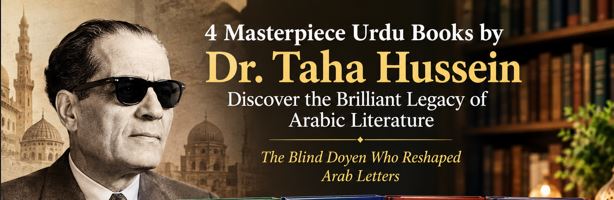
Dr. Taha Hussein (November 15, 1889 – October 28, 1973) was a seminal Egyptian modernist scholar, essayist, and historian universally venerated as the Dean of Arabic Literature (’Amīd al-’Adab al-’Arabī). Despite permanent blindness in early childhood, his pioneering critical methodologies revolutionized contemporary Islamic historiography and modern Arabic prose.
Dr. Taha Hussein did not merely contribute to the intellectual landscape of the Levant and the Nile basin; he radically interrogated its foundations, disassembling classical complacencies to build an unyielding tradition of analytical rigor. Blighted by medical negligence that robbed him of his sight at three years old in an Upper Egyptian village, his ascent to academic supremacy remains an intellectual anomaly that defies conventional limits. He broke through the centuries-old clerical inertia of Al-Azhar, absorbed the secular demands of the newly established Cairo University, and defended his groundbreaking doctoral thesis at the Sorbonne in Paris.
To confront Arabic literature is to confront an intensely dense, philologically demanding discipline where lineage, phonology, and syntactic precision determine authority. For an individual stripped of visual text to not merely survive this rigorous terrain, but to master its linguistic contours so completely that generations of scholars crowned him ’Amīd al-’Adab al-’Arabī (The Dean of Arabic Literature), is a monumental feat of human will and intellectual clarity. His vast compendium of critical treatises, cultural dissertations, and autobiographical narratives did not appeal to casual sensibilities. Instead, they demanded an audience of seasoned intellectuals, classicists, and modern reformers who recognized his work as an indispensable foundation for twentieth-century thought.
Hussein transformed visual deprivation into acute acoustic and semantic perception. Where sighted critics saw static manuscript pages, he discerned rhythmic fractures, anachronisms, and cultural signatures within the oral fabric of pre-Islamic poetry and early Islamic society. In modern Middle Eastern studies and classical Arabic historiography, his textual analyses serve as a definitive benchmark of intellectual integrity. Literary historians do not review his volumes as passive creative reflections; they engage them as living primary references that established empirical scrutiny within regional literature. Readers exploring foundational Islamic history and Middle Eastern classics can discover his primary volumes within our curated Classical Arabic Literature & History Collection.
Bridging the Linguistic Divide — Dr. Taha Hussein’s Urdu Masterpieces
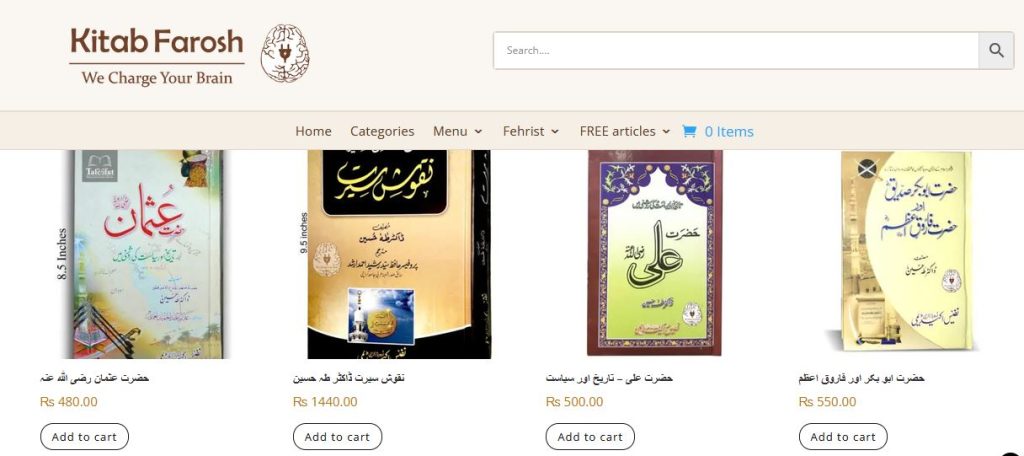
While Dr. Taha Hussein originally penned his monumental critical historiography in complex classical Arabic, four of his most seminal works are now officially available in Urdu translation on KitabFarosh. Readers across Pakistan can access these authenticated editions directly through the Dr. Taha Hussein Urdu Books Collection with seamless nationwide doorstep delivery.
For decades, the profound literary and historical output of Dr. Taha Hussein remained locked behind the formidable barrier of advanced classical Arabic. For Urdu-speaking researchers, students, and serious literature enthusiasts across Pakistan, engaging with the Dean of Arabic Literature demanded either deep philological mastery of classical Arabic or reliance on fragmented, second-hand summaries. Hussein’s prose is notoriously intricate; it weaves acoustic balance, rigorous historical skepticism, and classical cadence in a manner that simple translation attempts often struggle to preserve. Consequently, generations of South Asian readers recognized his prestige without having direct access to his intellectual arguments.
That intellectual divide has finally dissolved. In a monumental service to serious scholarship in Pakistan, four of Dr. Taha Hussein’s premier treatises have been carefully translated into Urdu, preserving the weight of his historical inquiries and the sheer majesty of his prose. These Urdu translations cover critical historical intersections—including his celebrated biographical and political examinations of early Islamic governance, such as his penetrating analyses of the Rashidun Caliphs and the prophetic biographical nuances found in works like Nuqoosh-e-Seerat (‘Ala Hamish al-Sirah) and his historical-political dissections of Hazrat Ali and the early caliphate.
Instead of navigating unreliable digital reproductions or hunting through out-of-print archival repositories, readers can now explore the complete catalog online. Through our verified portal, you can inspect comprehensive publication details, hardbound binding specifications, updated pricing, and detailed bibliographic descriptions for all four volumes. Serious readers and collectors can secure their personal copies directly from their desks or living rooms via the Dr. Taha Hussein Urdu Books Collection, complete with dedicated packaging and fast, trackable doorstep delivery anywhere in Pakistan.
The Vanishing Imprint — Nafees Academy’s Irreplaceable Archival Stock
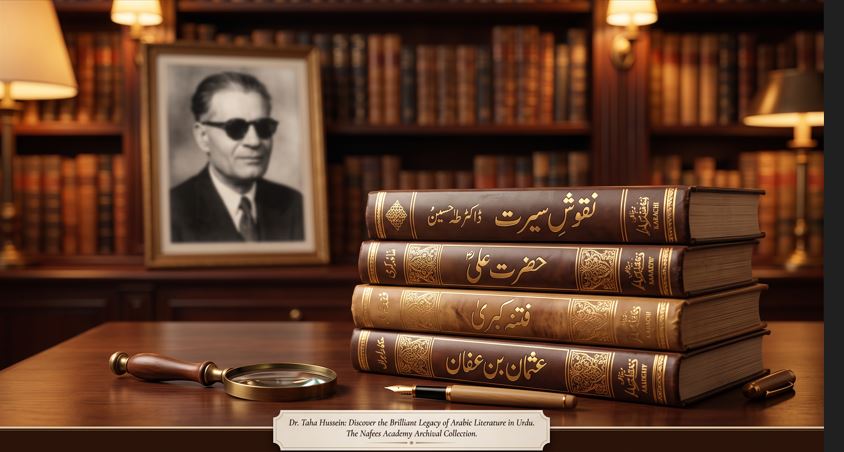
These rare Urdu editions of Dr. Taha Hussein were produced decades ago by the historic Nafees Academy, an esteemed publishing house that ceased operations permanently. With printing plates destroyed and original print runs discontinued, this verified remnant inventory represents the final surviving physical copies available through the Nafees Academy Archival Collection.
In the unpredictable annals of South Asian literary preservation, a critical publishing tragedy often occurs in absolute silence: seminal academic titles vanish from print without a modern successor stepping forward to preserve them. The Urdu translations of Dr. Taha Hussein’s magnum opuses were undertaken and published by Karachi’s renowned Nafees Academy—a distinguished institution celebrated for introducing heavyweight historical, theological, and philosophical works to Urdu readers. Several years ago, Nafees Academy permanently closed its doors and ceased publication across its entire scholarly catalog. Because modern mainstream publishing conglomerates rarely shoulder the heavy legal and editorial costs required to re-typeset dense academic translations of 20th-century Arabic scholars, these four volumes face total extinction once current copies sell out.
What rests in the KitabFarosh warehouse is the genuine, final archival stock salvaged from old inventory reserves. Prospective readers and collectors should observe that these are not glossy, synthetic reprints off modern computerized presses; they are authentic, out-of-print historical artifacts. Because they have rested in storage warehouses over the years since Nafees Academy liquidated, individual copies may exhibit slight external vintage wear, subtle page toning, or faint binding imperfections that come naturally with genuine aging paper. Yet, it is precisely this patina that certifies their provenance and authenticity.
Let this serve as an absolute imperative for literary collectors, Islamic history scholars, and bibliophiles: once this minuscule reserve of Nafees Academy editions sells out, there is zero probability of a reprint. Hesitating on these remaining copies means forfeiting the opportunity to possess Taha Hussein’s unedited Urdu thought in physical form, leaving buyers stranded with lifelong collector’s regret. In addition to Taha Hussein’s works, bibliophiles can explore the surviving inventory of out-of-print classics on the Nafees Academy Archival Collection before these literary remnants disappear into private collections forever.
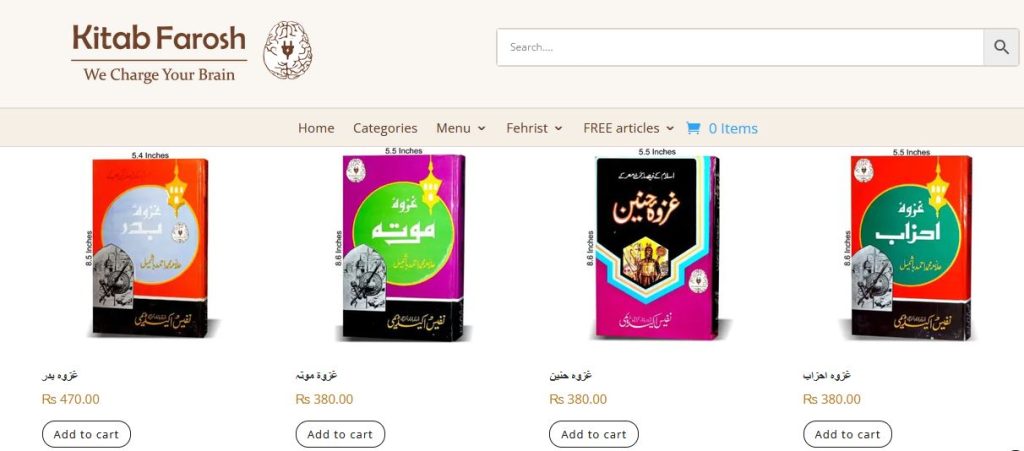
The KitabFarosh Standard — Seamless Logistics, Dedicated Surveillance, and Community Trust
KitabFarosh stands as Pakistan’s premier online bookstore, engineering an end-to-end literary distribution ecosystem that delivers verified historical and rare titles within 3 to 5 business days nationwide. Backed by express logistics pipelines, proactive parcel tracking surveillance, and an active digital community, it ensures fragile archival works reach readers safely and securely.
Acquiring scarce, out-of-print intellectual volumes requires far more than an automated checkout terminal; it demands a dedicated distribution partner that respects the fragility and cultural importance of classic literature. KitabFarosh has built its reputation across Pakistan as the definitive online bookstore by bridging the chasm between vanishing intellectual archives and demanding scholars. When readers place an order for rare print runs—such as Dr. Taha Hussein’s discontinued works—the journey from the temperature-managed warehouse shelf to the reader’s study is guarded with meticulous operational precision.
Unlike generic marketplaces that outsource and abandon consignments after dispatch, our operations team coordinates through integrated express delivery logistics to ensure swift fulfillment within 3 to 5 working days across every province. The cornerstone of the KitabFarosh service model is active consignment surveillance. From the moment your package is sealed with reinforced protective layers to withstand regional transit, our fulfillment staff conducts continuous, hands-on follow-ups, monitoring tracking intervals at every courier sorting hub until the parcel is placed safely in your hands. This dedicated oversight eliminates the risk of lost consignments, damaged antique bindings, or neglected transit milestones.
Our mission extends beyond transactional book fulfillment into cultivating an informed literary collective. Serious bibliophiles, academic researchers, and students can examine book overviews, unboxings, and critical recommendations by engaging with our video community on the official YouTube Channel: @Kitabfarosh. Furthermore, for real-time announcements regarding restocked rarities, historical reviews, and scholarly highlights, readers can connect with our dedicated reading network directly on Facebook at facebook.com/taleefat. Whether you are securing your set of Dr. Taha Hussein’s final surviving Urdu prints or sourcing rare academic volumes, KitabFarosh provides unmatched logistical reliability and scholarly curation across Pakistan.

Dr. Taha Hussein kon thay aur unka laqab kya hai?
Dr. Taha Hussein Misr (Egypt) ke aik maroof jadeed scholar, muarrikh (historian) aur musannif thay.
Bachpan mein beenai se mehroom honay ke bawajood unhon ne arbi adab aur islami tareekh par azeem tehqeeqi kaam kiya.
Unko unki ilmi khidmat ki bina par “Ameed-ul-Adab-al-Arabi” (Dean of Arabic Literature) ka laqab diya gaya.
Dr. Taha Hussein ki Urdu tarjuma shuda kitabein kin mauzoaat par hain?
Ye kitabein ibtidaai Islami tareekh, Khilafat-e-Rashida, Hazrat Ali (R.A) ke daur ke tareekhi o siyasi tajziyat, aur Seerat-e-Nabwi par mushtamil hain (jaisay ke ‘Nuqoosh-e-Seerat’).
Ye Urdu editions kis idaray ke shaya karda hain?
Ye nayaab Urdu editions Karachi ki tareekhi aur maroof “Nafees Academy” ke shaya karda hain.
Kya ye kitabein nayi reprint shuda hain?
Nahi, Nafees Academy mukammal taur par band ho chuki hai aur uski printing plates bhi zaya ho chuki hain.
Ye maujooda kitabein puranay bache huay asli stock (archival inventory) se li gayi hain.
Ziada arsa pehle chhapne ki wajah se in par halki si vintage look ya safhon ka halka peelapan ho sakta hai, jo inke asal honay ka sabot hai.
Pakistan mein ye kitabein kahan se mil sakti hain?
Ye kitabein “KitabFarosh” ke online portal ke zariye direct ghar bethay mangwai ja sakti hain.
Delivery mein kitna waqt lagta hai aur packaging kaisi hoti hai?
Poore Pakistan mein delivery 3 se 5 working days ke andar ki jati hai.
Nayaab kitabon ki hifazat ke liye mazboot protective layers wali packaging ki jati hai aur parcel deliver honay tak tracking ko closely monitor kiya jata hai.
Kitabon ke reviews ya unboxing videos kahan dekhi ja sakti hain?
Kitabon ki details aur unboxing dekhne ke liye KitabFarosh ke YouTube channel @Kitabfarosh par ja saktay hain.
Nayi updates aur scholarly discussions ke liye unke Facebook page [facebook.com/taleefat](https://facebook.com/taleefat) par rabta kiya ja sakta hai.